The website I created for Meredith and Eyre Trailers presented a different challenge from most of the marketing websites I’d worked on previously.
Rather than simply displaying a range of products or services, this website needed to allow customers to browse the company’s extensive range of trailers, compare specifications and find detailed technical information.
Working alongside my friend and colleague Gavin Burnett, I was responsible for the WordPress development, building a custom theme and developing the functionality needed to present the company’s range of trailers and components.
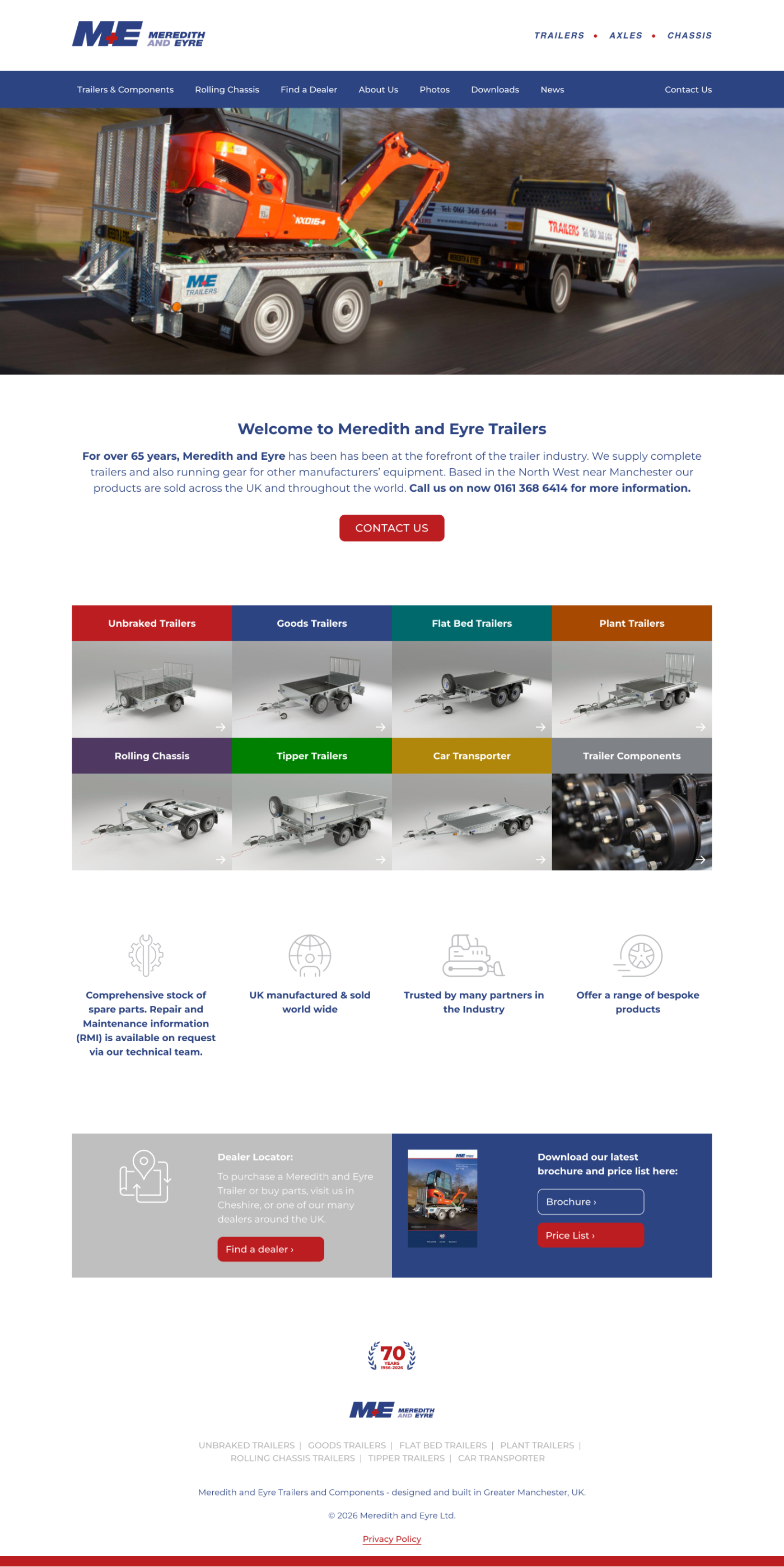
The Meredith and Eyre Website
A structured catalogue of products
One of the main challenges was finding the right way to organise the different trailer products and their specifications.
The range included several categories, such as flatbed trailers, rolling chassis and goods trailers, each with its own models and variations. Flatbed trailers, for example, were organised into different series, while goods trailers were available in sizes including 8′ × 4′, 8′ × 5′ and 10′ × 5′.
To accommodate this, I created a custom post type in WordPress specifically for the trailers, using hierarchical taxonomies to organise the categories and subcategories.
This created a logical and flexible structure and meant we could organise and display products in the same way as the company’s printed product catalogue.
Managing product information
The trailer post type uses custom fields to store and manage information about each trailer, including technical specifications and images.
Rather than manually building each product page and entering the same information in different places, I created a system in which the content was stored in structured fields within WordPress and displayed through the website’s templates.
This meant product information could be entered and maintained through the WordPress dashboard, while the website presented it in a clear, consistent format.
Thinking about how information is structured at the beginning of a project can make a website like this so much easier to maintain and use.
Making it easy to compare trailers
With a product range of this size, I wanted to make it straightforward for customers to compare different models without having to navigate between lots of pages.
The category pages group related trailers into tables under their respective headings. The tables display key details, including model numbers, weights and frame dimensions, all taken from the information stored in each trailer post.
Customers can browse the available models, compare specifications and select an individual trailer to find out more and this simplifies what could otherwise have been a complicated product catalogue.
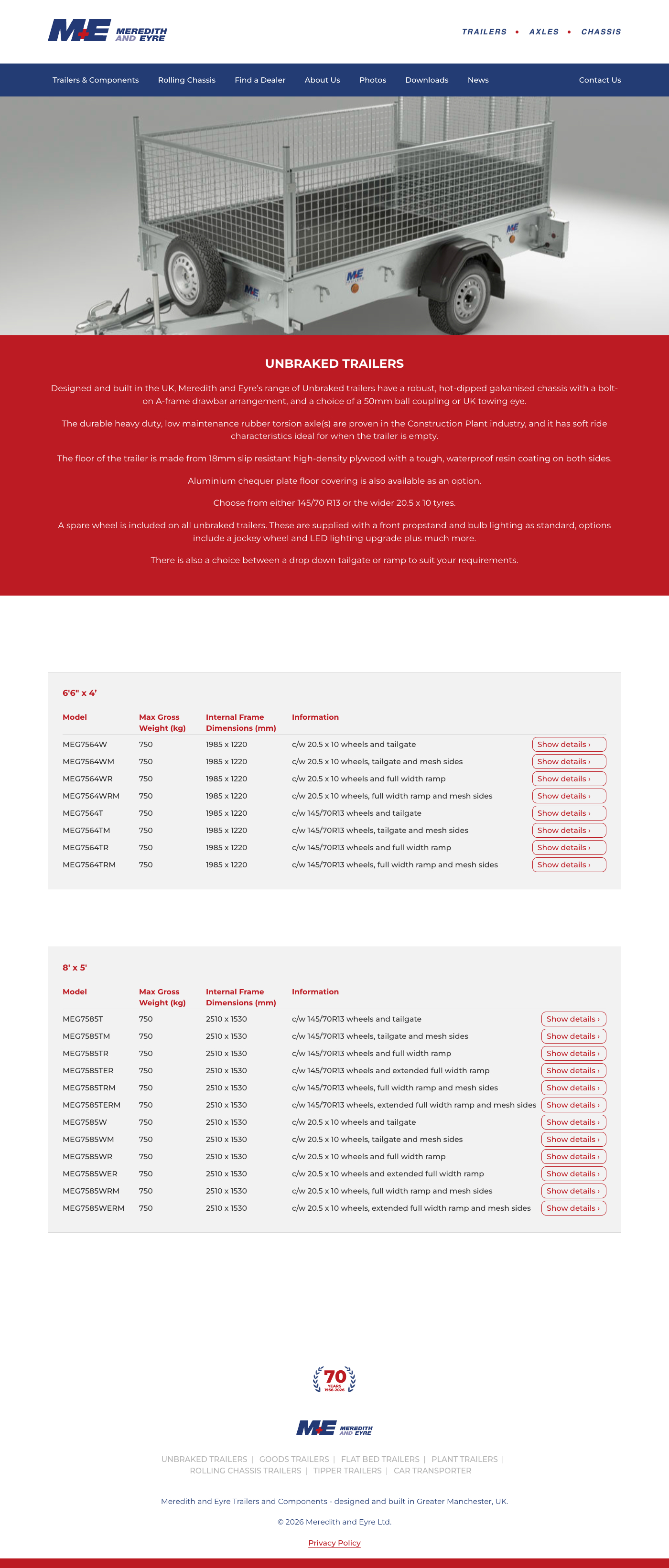
The main product page from the Meredith and Eyre website showing technical data for a range of Unbraked Trailers
Presenting each trailer
Each trailer has its own dedicated page that displays its specifications, product imagery and additional information.
I used a tabbed layout to organise the details into four sections – standard equipment, optional equipment, technical information and a link to the company’s price list.
This keeps the information organised into manageable sections rather than presenting everything in one long block of text.
The individual product pages also include a gallery of beautifully rendered 3D images, giving customers a closer look at the trailers alongside the technical information.
The aim was to give customers enough detail to understand the differences between models and look at the specifications that met their requirements.
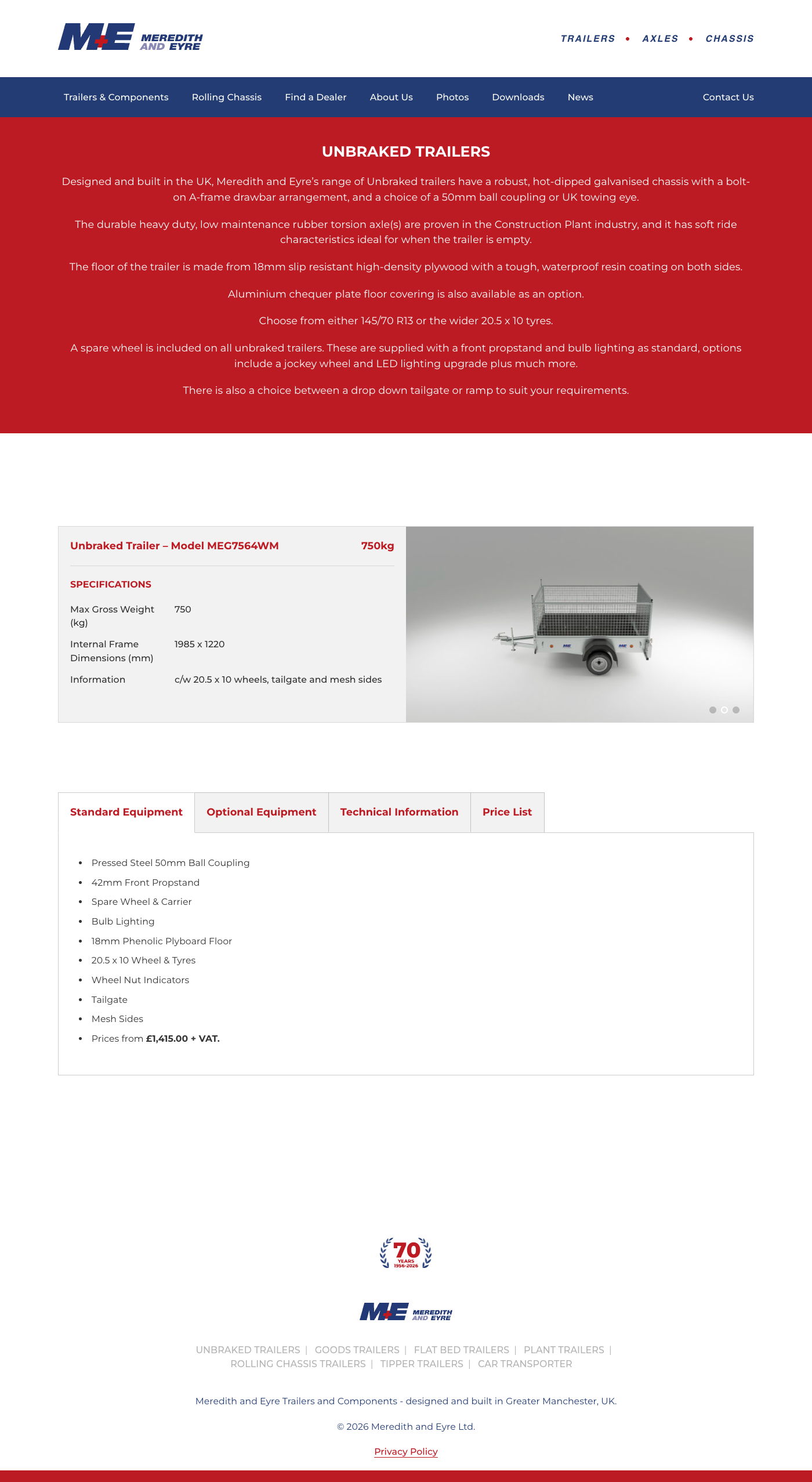
A product page from the Meredith and Eyre website showing technical data for an Unbraked Trailer
Implementing the dealer locator
Meredith and Eyre sells its products through a dealer network, so helping customers find a local dealer was another important part of the website.
Rather than developing a dealer locator from scratch, I implemented an existing WordPress plugin and restyled it to fit the website’s design.
I always think this is a practical and pragmatic approach to web development. If a solution exists that does the job really well, there’s no point in reinventing the wheel.
Working with Gavin
The Meredith and Eyre website was a collaboration with my friend and colleague Gavin Burnett, who designed the look and feel of the site.
My role was to turn Gavin’s designs into a working WordPress website, developing a custom theme, structuring the product information and implementing the required functionality.
A project like this involves more than just translating a design into code. The content structure and functionality need to work together, particularly when a website contains a large amount of technical data.
By building the website around the company’s products and using structured fields and taxonomies, I was able to create a custom solution that suited Meredith and Eyre’s needs far better than a generic template ever could.
A custom website built around the needs of the business
The Meredith and Eyre project is a great example of how I approach building a custom WordPress website. Every business has specific requirements. For some, a straightforward marketing website is all that’s needed. For others, a more structured approach is necessary to manage products, technical specifications and supporting information.
The important thing is to fully understand those requirements and build a website that works both for the business and its customers.
If your business needs a custom website tailored to its products, services and customers, find out more about my web design and development services.